




关联资料
更新日期:2024/03/05
更新日期:2024/03/05
The second picture is selected from the book Song Nian Zhu Gui Cheng (1619-1624) by Jesuit Joao da Rocha in the Ming Dynasty of Emperor Wanli. The book tells of the Gospel story in the person of Virgin Mary. With this context, the uniqueness of the picture is to be known so far as the earliest derivative work of Evangelicae Historiae Imagines in Chinese. Moreover, elements of Chinese traditions can also been observed in this western motif, from its architecture, patio designs and styles of furniture to people's facial expressions and clothing. All these Chinese elements familiarize Chinese readers with the western story, thus reflecting missionaries' strategies of religion localization. It has been researched that this picture was redrawn by the Dong Qichang or his students, and then engraved on wood by craftsmen. Joao da Rocha (with his Chinese courtesy name as Huaizhong) was a Portuguese Jesuit. He was summoned by Alessandro Valignano to arrive in Macao in 1591, and then to Nanjing in 1600. He baptized Official Xu Guang Qi in 1603, and died in Hangzhou in 1623. Reference:. D'Arelli, Francesco. (1997). I libri cinesi di G. Francesco Nicolai, O.F.M. nel fondo Borgia cinese della Biblioteca Apostolica Vaticana. Archivum franciscanum historicum, 90, 526-532. . 莫小也. (2011). 17-18世纪传教士与西画东渐. 杭州:中国美术学院出版社. . 陈焕强. (2013). 明清天主教《圣经》故事版画图像叙事研究. 广州:暨南大学. . 谢辉. (2015). 梵蒂冈图书馆藏艾儒略著作二种版本考略. 国际汉学, (3), 178-184, 205.
Three Works on Annuciation, 16th-17th century (II)
Giulio Aleni, an Italian Jesuit, arrived in Macao via Goa of India in 1610 and later came to mainland China in 1613. He did missionary work in several cities like Beijing, Kaifeng, Nanjing, Hangzhou and in Fujian Province. He helped build as many as 20 churches and baptized more than 10,000 people, so he was praised as the 'western Confucius' by local Christians. When he was in Hangzhou city in 1623, Giulio Aleni studied Abraham Ortelius's Theatrum Orbis Terrarum and the works from Diego de Pantoja and Sabatino de Ursis, and then made Wan Guo Quan Tu (Map of the world) and compiled it to the book of Zhifang Waiji (Chronicle of Foreign Lands). The map was constantly reprinted and spread in varied versions. There are both monochrome and colored versions in Vatican Library, hereinafter referred as Version A and Version B, according to the shelfmarks. Version B consists of three parts in monochrome ink, with the first part as introduction, the middle part as Wan Guo Quan Tu, and the final part as two hemisphere maps of Bei Yu Di Tu (Map of the North) and Nan Yu Di Tu (Map of the South). While Version A covers the ink monochrome with colors, but removes the two hemisphere maps, with the introduction part and the final part left. Aleni employed Chinese conceptions of size and varied layers of 'Heaven' in order to elaborate geographical concepts and Catholic doctrines, with an attempt of breaking up the stereotypes of imperial centralism, and thus inspiring and establishing a new outlook of world among scholar officials in late Ming Dynasty. In addition to the names of the fifteen provinces, it is also included the four Chinese characters, '大清一统' (Da Qing Yi Tong , means unification of Qing Dynasty) on the inland places of the both versions. These four characters might prove the year of 1648 as a transitional period, when the army of Qing Dynasty established themselves in Fujian Province, and in the second year Aleni died. Interestingly contradicted, the two marine sections was both marked as '大明海'(Da Ming Hai, Sea of Ming Dynasty). In Bei Yu Di Tu (Map of the North) of version B, “大明一统' (Da Ming Yi Tong, unification of Ming Dynasty) was in the inland place, and Da Ming Hai in the ocean part. It thus could be presumed this engraved versions of Ming Dynasty were still in use in the early Qing Dynasty, being only partially modified. Reference:. 黄时鉴. (2011). 艾儒略《万国全图》AB 二本见读后记. 黄时鉴文集3:东海西海, 东西文化交流史(大航海时代以来). 中西书局,273-280.. 邹振环. (2011). 晚明汉文西学经典 编译、诠释、流传与影响. 上海:复旦大学出版社, 255-288.
Aleni Map of all the Kingdoms of the World, A, B version, ca. 1648
The third picture is selected from Jesuit Giulio Aleni's Tian Zhu Jiang Sheng Chu Xiang Jing Jie (天主降生出像经解, explanations on the incarnation of the heavenly lord), an illustration book of Jesus Christ's biography from his birth to resurrection and ascension. Drawn in the year of 1637 (the tenth year of Emperor Chongzhen), the book uses the traditional Chinese crafts of woodcarving to represent the western images in illustrations. Learning from the method of western engraving to grasp the main features, the images bear great resemblance to the book of Evangelicae Historiae Imagines by Jerome Nadal. Regardless of the aversions from Chinese traditions, the image of crucified Jesus was engraved as half naked on the Cross. This preceding conflict reflected those changes of missionary strategies during the historic Anti-Christian Campaigns in the late Ming. Juliano Aleni remarked on the book to express forthrightly his purpose of mission in China as when people read the book, they feel like praising and worshiping Lord, with all words and all deeds. Due to the Fujian Anti-Christian Campaign in the year of 1637, Juliano Aleni was expelled from China to Macao, hindering Catholic missions in China. Vatican Library has four editions and ten volumes of Aleni's Tian Zhu Jiang Sheng Chu Xiang Jing Jie. This selected picture is from the wood-bloack print edition of Jinjiang Nestorianism Church (晋江景教堂) in Late Ming. Reference:. D'Arelli, Francesco. (1997). I libri cinesi di G. Francesco Nicolai, O.F.M. nel fondo Borgia cinese della Biblioteca Apostolica Vaticana. Archivum franciscanum historicum, 90, 526-532. . 莫小也. (2011). 17-18世纪传教士与西画东渐. 杭州:中国美术学院出版社. . 陈焕强. (2013). 明清天主教《圣经》故事版画图像叙事研究. 广州:暨南大学. . 谢辉. (2015). 梵蒂冈图书馆藏艾儒略著作二种版本考略. 国际汉学, (3), 178-184, 205
Three Works on Annuciation, 16th-17th century (III)
This is a replica painting of the Qing Ming Shang He Tu, with the original title in Chinese 'Replica painting of Qing Ming Shang He Tu in Song-Dynasty'. Qing Ming Shang He Tu was first made by the Song Dynasty artist Zhang Ze Duan (1085-1145). It captures the daily life of people and the landscape of the capital, Bianjing, today's Kaifeng, from the Northern Song period. The theme is often said to celebrate the festive spirit and worldly commotion at the Qingming Festival, rather than the holiday's ceremonial aspects, such as tomb sweeping and prayers. Successive scenes reveal the lifestyle of all levels of the society, from rich to poor, as well as different economic activities in rural and urban areas, and offer glimpses into period clothing and architecture. The painting is considered to be the most renowned work among all Chinese paintings, and it has been called 'China's Mona Lisa.'Because the piece has been revered as an artistic creation, court artists of subsequent dynasties created reinterpretive versions of the work, each following the overall composition and the theme of the original, while introducing new details and techniques. One such early remake, generally considered to be very faithful to the original, was made by Zhao Meng Fu during the Yuan Dynasty. Another notable remake was painted by Qiu Ying (ca. 1494-1552) of the Ming Dynasty. This version replaced the scenery from the Song Dynasty with that of the Ming Dynasty, and updated the costumes worn by the characters and the styles of vehicles (boats and carts) according to contemporary customs. The Song wooden bridge is replaced with a stone bridge in the Ming remake. The arc of the stone bridge is much taller than that of the wooden original, and where the original had a boat about to crash into the bridge, the reinterpretation has a boat being methodically guided under the bridge by ropes, pulled by men ashore, while several other large boats dutifully wait their turn, undisturbed. Another version by five Qing Dynasty court painters was presented to the Qianlong Emperor in 1737. The Song Dynasty original and the Qing version, in the Beijing and Taipei Palace Museums respectively, are regarded as national treasures and are exhibited only for brief periods every few years.This painting arrived in the Vatican Apostolic Library in 1879 through the Secretariat of State of the Holy See. The work was in possession of some collectors, including Yong Jing (1712-1787) of the imperial family, who was a famous collector of calligraphic works and paintings. It is probably one of the first paintings of the Qiu Ying School. So far, the painting in the Vatican Apostolic Library has been little studied. For example, from the Library's register one sees that there were only four or five requests made from the 30s and 40s of the last century till now, although a partial reproduction of the work was used on Vatican stamps issued on the occasion of the 9th Asian International Philatelic Exhibition in Beijing in 1996.Reference:. China online museum. (2015). Along the River During the Qingming Festival. Retrieved from http://www.comuseum.com/painting/famous-chinese-paintings/along-the-river-during-the-qingming-festival/. 单国强. (2015). 仇英模清明上河图鉴赏. 苏州: 古吴轩出版社.
Replica Painting of Qing Ming Shang He Tu in Ming Dyansty, 16th Century
This drawing depicts the death of St. Francis Xavier, a missionary Jesuit who died on Shangchuan Island, Guangdong Province in China. He was born in the castle of Xavier in April 1506, and studied at the University of Paris where he met St. Ignatius Loyola, the future founder of the Society of Jesus. On August 15, 1534, they both made a vow of chastity and poverty in the Chapel of the Martyrs of Montmartre and started a pilgrimage to the Holy Land. Later on, St. Francis engaged in the 'Spiritual Exercises' under the direction of St. Ignatius, and in June 1537 he was ordained a priest. The following April he participated in the meetings that led to the foundation of the Society of Jesus, which was approved subsequently by Pope Paul III in September 1540. St. Francis was sent as a missionary to the East: first to India, then to Japan, and finally to China. On the island of Shangchuan, he became seriously ill and died on December 3, 1552. In 1619, Pope Paul V proclaimed him a saint in the canonization ceremony of March 12, 1622 in St. Peter's Basilica. Although the most frequent depictions of the saint show him preaching, baptizing Indians or working various miracles, this drawing instead depicts the moment of his death. In the drawing, the saint lies on a woven mat, with his arms folded across his chest, while in his right hand he holds a cross. On his left, an angel points the way to the divine light, while cherubs witness the scene in the clouds. This drawing is part of Cappon . 237, a volume of miscellaneous drawings from the collection of Marquis Alessandro Gregorio Capponi whose rich library he bequested to the Vatican Apostolic Library in 1746. In particular, the drawing belongs to a series of random drawings. From their similar style and technique, however, it is presumed that these drawings can be attributed to the same artist, even though no further evidence can prove this. Some of the drawings can be dated back to the year of 1715, and from the initials M. N., the author could be presumed to be Marco (or Mauro?) Nacchetti, a relatively unknown artist who specialized in the representation of devotional vignettes. One of the most famous representations of the death of St. Francis Xavier is the painting of Carlo Maratta on the altar dedicated to the saint in the Church of the Gesù in Rome. Above this altar, the relic of St. Francis Xavier's right arm is kept (it is believed that with this arm he baptized about thirty thousand people). St. Francis Xavier is buried in in the Jesuit Church of Goa. A church in his honor was built in Coloane, Macao, and the chapel of the Seminário de São José of Macao has relics of his bracelet and a small piece of his bone.Reference:. Raggi, A. M. (1964). Francesco Saverio in Bibliotheca Sanctorum, vol. V. Roma, pp. 1226-1238. . Gobbi, M. (2010). I disegni del codice Capponiano 237 della Biblioteca Apostolica Vaticana, a cura di M. Gobbi e S. Prosperi Valenti Rodinò . Città del Vaticano, pp. 144-146 cat. 175.
Death of St Francis Xavier, early 18th century
Giovanni Orlandi (1590-1640) was an engraver, printer and print publisher from Bologna. Active in Rome from about 1590 until 1613, he then worked in Naples. This is a printed copy of the famous icon venerated in the Basilica of St. Mary Major in Rome, entitled 'Salus Populi Romani ', with the inscription at the bottom: 'Giouanni Orlandi forma in Roma a pasquino '. The original sheet is veiled with Japanese paper for restoration. A copy of the icon was offered by Matteo Ricci as a gift to Emperor Wanli. The Marian devotion of Ricci was well known and he made numerous images of Mary in China. One of the Chinese reproductions of the Salus Populi Romani from Ricci mission was discovered in Xi'an in 1911 and currently is kept at the Field Museum of Chicago. The venerated icon of the Virgin Mary, devotion to which is widespread in the Catholic Church, arrived and became venerated in China thanks to Father Matteo Ricci. Athanasius Kircher, in an engraving inserted in his book China illustrata , depicts Father Matteo Ricci in clothes of the Chinese literati with his friend, the convert, Paul Xu Guang Qi. On the wall behind them, is an image of the Roman icon, which according to an ancient tradition is said to have been painted by St. Luke the Evangelist.Reference:. Morello, G. (2009?). Copia della Madonna Salus Populi Romani di Santa Maria Maggiore. In Ai crinali della storia: padre Matteo Ricci (1552- 1610) fra Roma e Pechino . Torino, p.199. . 林金水. (1996). 利玛窦与中国. 北京: 中国社会科学出版社, pp. 86-88, 255-257. . Bury, M. (2001). The Print in Italy 1550-1625 . London: British Museum, p.230.
Copy of the Madonna Salus Populi Romani, ca. 1598
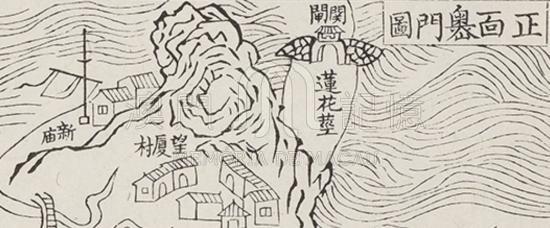
| Tempo: | Dinastia Qing entre 1760 e 1844 |
| 1813 | |
| Palavra-chave: | Litoral |
| Arquitectura | |
| Embarcação |
| Contribuitor: | Anónimo |
| Fonte: | Vid goroda Makao s morskoĭ storony. V Sankt-Peterburgie, v Morskoĭ tipografĭi, 1813. |
| Fornecedor de trabalho digital: | Universidade de Ciência e Tecnologia de Macau |
| Autorização: | Autorização do uso concedida à Fundação Macau por Universidade de Ciência e Tecnologia de Macau |
| Dimensão: | 32 x 75 cm |
| Idioma: | Russo |
| Data de produção: | 1813 |
| Tipo: | Imagem |
| Preto e branco | |
| Formato das informações digitais: | JPG, 3000x1421, 2.68MB |
| Identificador: | p0001077 |
尊敬的“澳门记忆”会员,您好!
感谢您长期以来对“澳门记忆”文史网的支持与信任。为持续优化会员服务质量与保障会员权益,本网站将自2025年4月28日起正式实施新版的《服务条款》。敬请各位会员详阅修订后之条款,有关内容可于以下查阅:
您已详细阅读并同意接受该等《服务条款》修订内容。
若您对本次更新有任何疑问,欢迎随时与我们联系。
感谢您一如既往的支持与信任,“澳门记忆”文史网将持续为您提供更安心、便捷的会员服务。
“澳门记忆”文史网 敬启
发布日期:2025年4月28日
使用说明
检视全站索引
“AND”,为缩小检索范围,表示前后搜索项之间的 “交集”;
“OR”, 为扩大检索范围,表示前后搜索项之间的 “联集”;
“NOT”,为排除不相关的检索范围 ,“AND NOT”表示第二个搜索项,在检索范围将被排除。
已经有澳门记忆帐号了? 登入
留言
留言( 0 人参与, 0 条留言):期待您提供史料和真实故事,共同填补历史空白!(150字以内)